
Guinea pigs can eat bok choy (also known as pak choi or Chinese cabbage), and this leafy green can be a healthy addition to their diet when fed in moderation. Bok choy is a cruciferous vegetable that offers good amounts of vitamin C and calcium while being low in sugar, making it a nutritious option for your guinea pigs.
However, like other cruciferous vegetables such as broccoli and kale, bok choy can cause gas if eaten in large amounts. So it’s best to offer it in small portions alongside a variety of other vegetables.
How to Safely Feed Bok Choy to Guinea Pigs
- Wash thoroughly — Always rinse bok choy well to remove any dirt or pesticide residue.
- Feed raw and fresh — Never cook vegetables for guinea pigs.
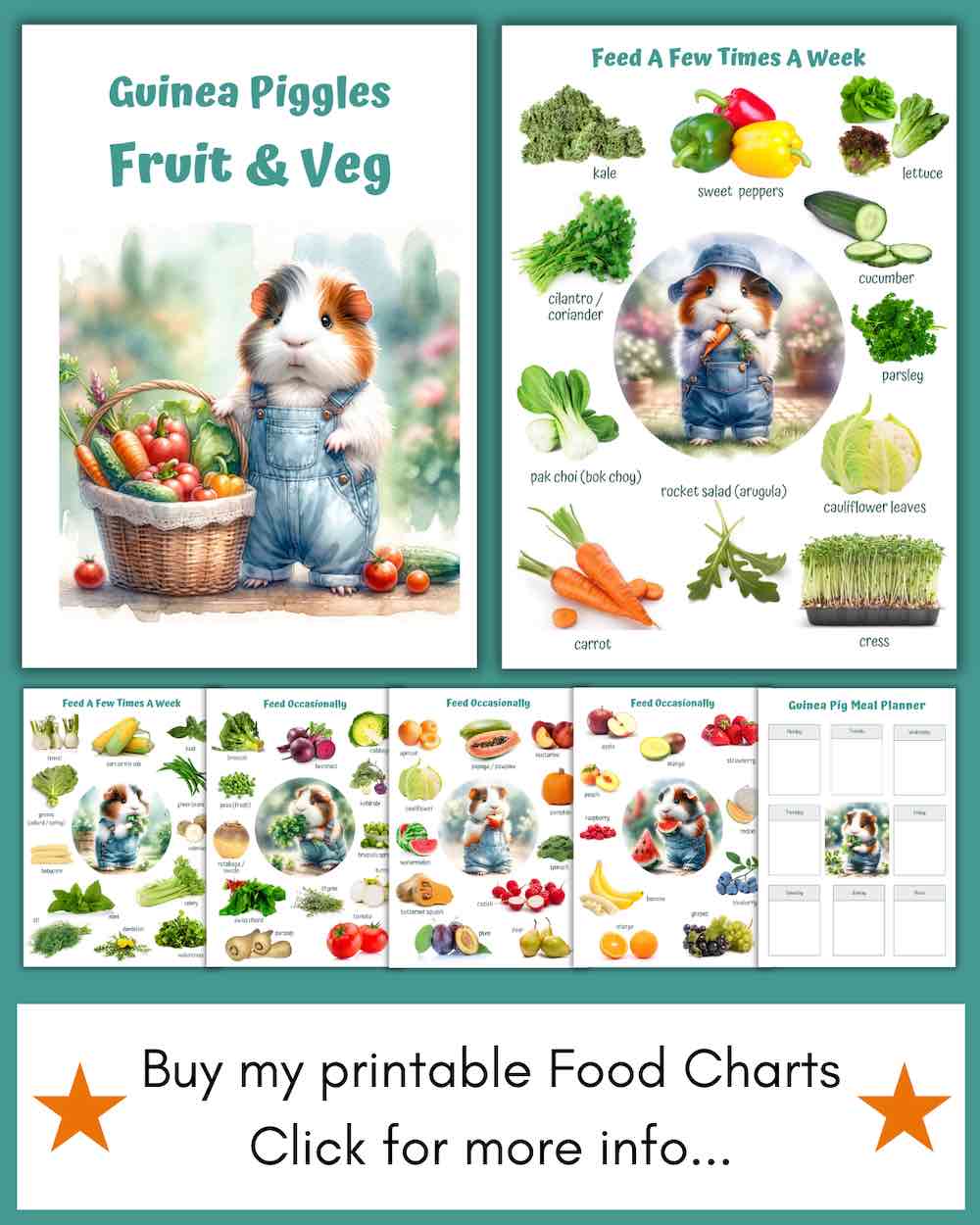
- Small portions only — Feed bok choy 2–3 times a week, mixed with other leafy greens and vegetables for balance.
- ⚠️ Avoid overfeeding — Large amounts can lead to gas or bloating, so moderation is key.
🧠 Quick Fact: Bok choy belongs to the cruciferous vegetable family — the same group as broccoli, kale, and collard greens — It’s a nutritious choice for guinea pigs when fed in moderation and is generally less likely to cause gas than many other cruciferous veggies.
Benefits of Bok Choy for Guinea Pigs
- Good source of vitamin C — Supports immune health and helps prevent scurvy.
- Contains calcium — Helps maintain strong bones and teeth when balanced with other low-calcium foods.
- Low in sugar — Lower in sugar than many other vegetables.
- Adds variety — Its mild flavour and crunchy texture add interest to their daily greens.
Nutritional Information
| Nutrition | mg per 100g |
|---|---|
| Vitamin C | 30.3 |
| Calcium | 62 |
| Sugar | 0.6 |
| Water | 94.5 |
| Fibre | 1.3 |
| Phosphorous | 31 |
Safe Vegetables
Full information on safe vegetables for guinea pigs including feeding guide ›
🫑 Bell Peppers → Read the Bell Pepper guide ›
🥬 Bok Choy → Read the Bok Choy (Pak Choi / Chinese Leaf) guide ›
🥦 Broccoli → Read the Broccoli guide ›
🥕 Carrots → Read the Carrot guide ›
🌱 Celeriac→ Read the Celeriac guide ›
🌱 Celery → Read the Celery guide ›
🥬 Collard Greens → Read the Collard Greens guide ›
🌾 Corn on the Cob → Read the Corn guide ›
🥒 Cucumber → Read the Cucumber guide ›
🌼 Dandelion → Read the Dandelion guide ›
🌿 Fennel → Read the Fennel guide ›
🌿 French Beans (Fine Green Beans) → Read the French Beans guide ›
🥬 Kale → Read the Kale guide ›
🥬 Lettuce → Read the Lettuce guide ›
🌿 Spinach → Read the Spinach guide ›
🍅 Tomato→ Read the Tomato guide ›
🍃 Watercress→ Read the Watercress guide ›
Safe Herbs
Full information on safe herbs for guinea pigs and feeding guide ›
🌿 Basil → Read the Basil guide ›
🌱 Coriander (Cilantro) → Read the Coriander guide ›
🌿 Dill → Read the Dill guide ›
🌱 Mint → Read the Mint guide ›
🌿 Parsley → Read the Parsley guide ›
Safe Fruits
Full information on safe fruit for guinea pigs and feeding guide ›
🍎 Apple →Read the Apple guide ›
🍌 Banana →Read the Banana guide ›
🫐 Blueberries →Read the Blueberries guide ›
🍇 Grapes →Read the Grape guide ›
🍈 Melon →Read the Melon guide ›
🍓 Strawberries →Read the Strawberry guide ›
🍉 Watermelon →Read the Watermelon guide ›
