
Yes, guinea pigs can eat sweet bell peppers in all colours — green, red, yellow, and orange. They are one of the healthiest vegetables you can feed your guinea pigs and an excellent source of vitamin C.
Benefits of Bell Peppers for Guinea Pigs
- Rich in vitamin C — Guinea pigs can’t produce this essential vitamin themselves, and peppers are one of the richest natural sources.
- Low in sugar — Especially green peppers, making them a daily-friendly vegetable.
- Hydrating and nutritious — High in water and fibre, supporting healthy digestion and hydration.
- Variety of flavours — Red, yellow, and orange peppers are sweeter, while green peppers are more bitter and less sugary.
Can Guinea Pigs Eat Pepper Seeds?
Yes — bell pepper seeds are safe for guinea pigs to eat. They are small and do not pose a choking hazard or risk of getting stuck in their teeth.
⚠️ Note: Do not confuse bell pepper seeds with peppercorns, which are spicy and not safe for guinea pigs.
Can Guinea Pigs Eat the Pith?
Yes — the white inner pith (placenta) is safe and edible. Although it tastes bitter to humans, guinea pigs can eat it safely. It’s a great way to reduce waste — simply include these parts in their daily veggie portion.
Do Guinea Pigs Like Peppers?
Most guinea pigs love sweet bell peppers — and many even enjoy the seeds and pith. Some may have colour preferences, but all varieties are safe and nutritious.
🫑 In my experience, none of the guinea pigs I’ve had have ever disliked peppers — they’ll happily eat the seeds, pith, and all! ❤️
Other Types of Peppers
Guinea pigs can also eat:
- Sweet pointed peppers — safe and slightly sweeter than standard bell peppers.
- Baby sweet peppers — safe and flavourful.
❌ Avoid all hot or spicy peppers (chilli, jalapeño, etc.) — these are unsafe and can cause pain or digestive distress.
Vitamin C in Peppers
All sweet peppers are very high in vitamin C, an essential nutrient for guinea pigs.
- Red, yellow, and orange peppers have the highest vitamin C content but slightly more sugar.
- Green peppers still provide plenty of vitamin C with less sugar, making them ideal for frequent feeding.
How Often Can Guinea Pigs Eat Peppers?
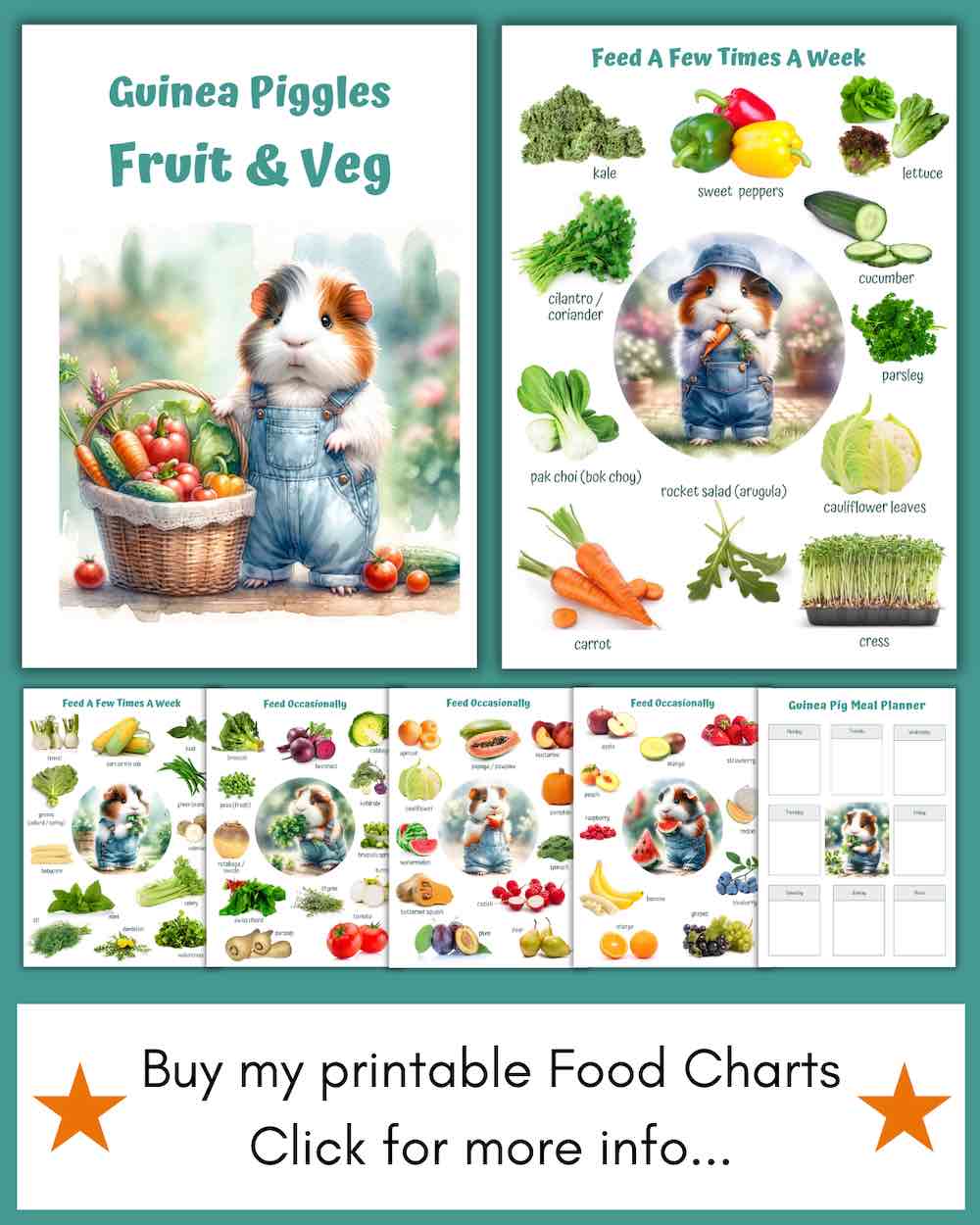
- Frequency: A few times per week (even daily in small amounts).
- Quantity: About a 1–2 inch square piece per guinea pig, mixed with other safe vegetables.
Nutrition Information
| Nutrition 🫑 | Green (mg per 100g) | Red (mg per 100g) |
|---|---|---|
| Vitamin C | 99.5 | 142 |
| Calcium | 7 | 6 |
| Sugar | 2.4 | 4.4 |
| Water | 94.1 | 91.9 |
| Fibre | 0.9 | 1.2 |
| Phosphorous | 17 | 27 |
Safe Vegetables
Full information on safe vegetables for guinea pigs including feeding guide ›
🫑 Bell Peppers → Read the Bell Pepper guide ›
🥬 Bok Choy → Read the Bok Choy (Pak Choi / Chinese Leaf) guide ›
🥦 Broccoli → Read the Broccoli guide ›
🥕 Carrots → Read the Carrot guide ›
🌱 Celeriac→ Read the Celeriac guide ›
🌱 Celery → Read the Celery guide ›
🥬 Collard Greens → Read the Collard Greens guide ›
🌾 Corn on the Cob → Read the Corn guide ›
🥒 Cucumber → Read the Cucumber guide ›
🌼 Dandelion → Read the Dandelion guide ›
🌿 Fennel → Read the Fennel guide ›
🌿 French Beans (Fine Green Beans) → Read the French Beans guide ›
🥬 Kale → Read the Kale guide ›
🥬 Lettuce → Read the Lettuce guide ›
🌿 Spinach → Read the Spinach guide ›
🍅 Tomato→ Read the Tomato guide ›
🍃 Watercress→ Read the Watercress guide ›
Safe Fruits
Full information on safe fruit for guinea pigs and feeding guide ›
🍎 Apple →Read the Apple guide ›
🍌 Banana →Read the Banana guide ›
🫐 Blueberries →Read the Blueberries guide ›
🍇 Grapes →Read the Grape guide ›
🍈 Melon →Read the Melon guide ›
🍓 Strawberries →Read the Strawberry guide ›
🍉 Watermelon →Read the Watermelon guide ›
Safe Herbs
Full information on safe herbs for guinea pigs and feeding guide ›
🌿 Basil → Read the Basil guide ›
🌱 Coriander (Cilantro) → Read the Coriander guide ›
🌿 Dill → Read the Dill guide ›
🌱 Mint → Read the Mint guide ›
🌿 Parsley → Read the Parsley guide ›
