
Yes, guinea pigs can eat lettuce, but not all types are equally nutritious. Some lettuces are high in vitamin C and fibre, while others provide little nutrition. Feeding the right types in moderation helps keep your piggies healthy and happy.
Benefits of Lettuce for Guinea Pigs
- Safe leafy vegetable — Most lettuce varieties are safe for guinea pigs.
- Nutrient variety and texture — Romaine and Cos are the most vitamin-rich, while Butterhead, red leaf, and green leaf add variety in taste and crunch.
- Popular choice — Lettuce is a favourite among many guinea pigs, making it an easy addition to their diet.
❤️🥬 Lettuce is a favourite among guinea pigs, and I’ve never met one that didn’t enjoy it—they usually tuck into these leaves before anything else!
How to Safely Feed Lettuce to Guinea Pigs
- Frequency: A few times a week.
- Quantity: One or two leaves per piggy mixed in with other greens and veggies.
- Preparation: Wash thoroughly to remove pesticides and dirt.
⚠️ Avoid: Iceberg lettuce — low in nutrients, high in water, and can cause diarrhoea due to high water content.
Types of Lettuce Guinea Pigs Can Eat
- Romaine/Cos/Little Gem: Most nutritious, higher vitamin C content.
- Butterhead/Boston/Bibb: Safe, moderate nutrition with highest calcium content.
- Red and Green Leaf: Safe, moderate nutrition and more calcium than Romaine.
- Other salad greens: Rocket (arugula), lamb’s lettuce, etc.
Cheap and Safe Alternative
If you have several guinea pigs, foraging for safe leafy weeds (eg dandelions) is an inexpensive and highly nutritious alternative to store-bought lettuce.
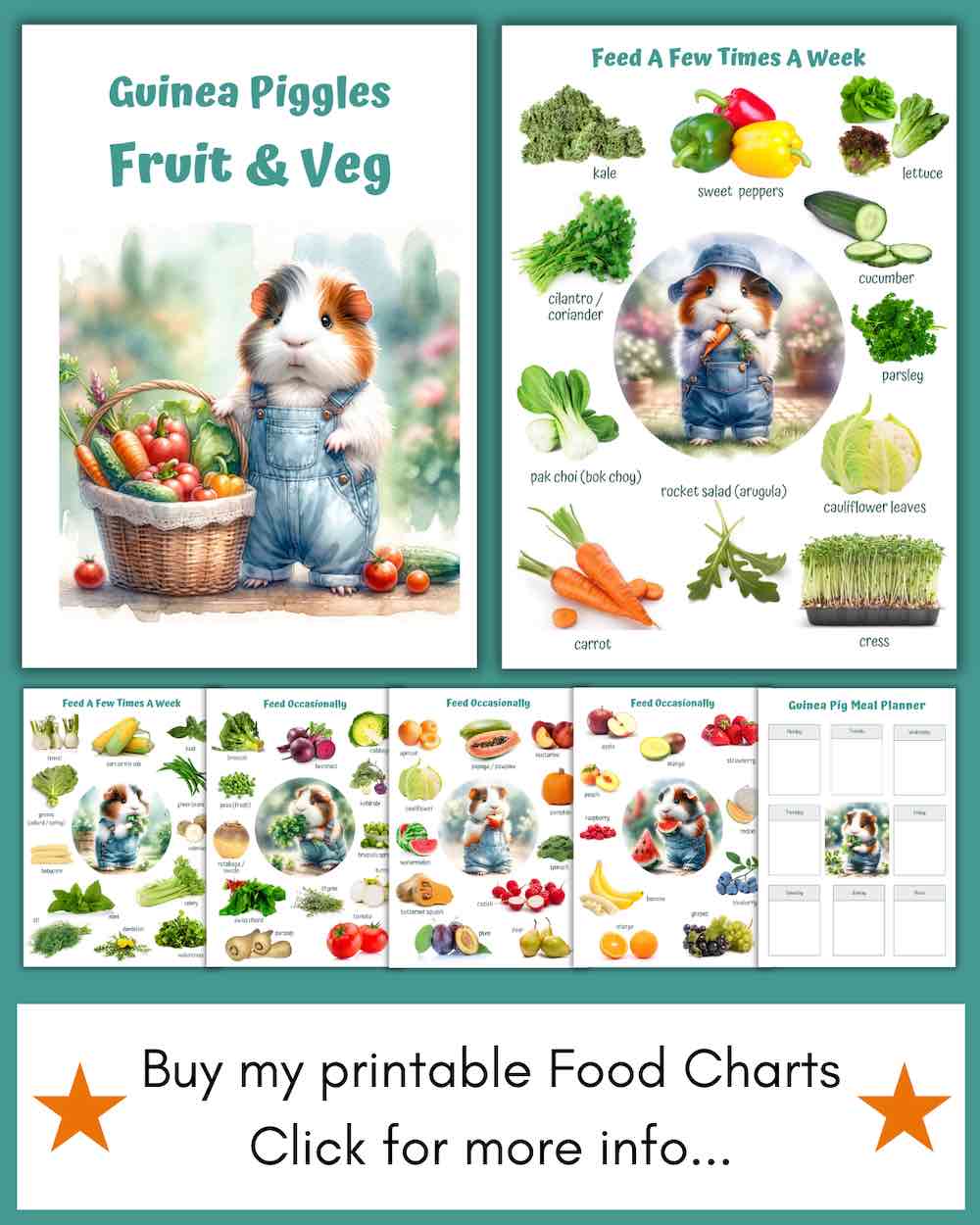
Nutritional Information
| Nutrition 🥬 | Red Leaf (mg per 100g) | Romaine/Cos (mg per 100g) | Round/Butterhead (mg per 100g) |
|---|---|---|---|
| Vitamin C | 3.7 | 13 | 3.7 |
| Calcium | 33 | 20 | 35 |
| Sugar | 0 | 1.8 | 0 |
| Water | 95.6 | 94 | 95.6 |
| Fibre | 0.9 | 1.8 | 1.1 |
| Phosphorous | 28 | 31 | 33 |
Safe Vegetables
Full information on safe vegetables for guinea pigs including feeding guide ›
🫑 Bell Peppers → Read the Bell Pepper guide ›
🥬 Bok Choy → Read the Bok Choy (Pak Choi / Chinese Leaf) guide ›
🥦 Broccoli → Read the Broccoli guide ›
🥕 Carrots → Read the Carrot guide ›
🌱 Celeriac→ Read the Celeriac guide ›
🌱 Celery → Read the Celery guide ›
🥬 Collard Greens → Read the Collard Greens guide ›
🌾 Corn on the Cob → Read the Corn guide ›
🥒 Cucumber → Read the Cucumber guide ›
🌼 Dandelion → Read the Dandelion guide ›
🌿 Fennel → Read the Fennel guide ›
🌿 French Beans (Fine Green Beans) → Read the French Beans guide ›
🥬 Kale → Read the Kale guide ›
🥬 Lettuce → Read the Lettuce guide ›
🌿 Spinach → Read the Spinach guide ›
🍅 Tomato→ Read the Tomato guide ›
🍃 Watercress→ Read the Watercress guide ›
Safe Fruits
Full information on safe fruit for guinea pigs and feeding guide ›
🍎 Apple →Read the Apple guide ›
🍌 Banana →Read the Banana guide ›
🫐 Blueberries →Read the Blueberries guide ›
🍇 Grapes →Read the Grape guide ›
🍈 Melon →Read the Melon guide ›
🍓 Strawberries →Read the Strawberry guide ›
🍉 Watermelon →Read the Watermelon guide ›
Safe Herbs
Full information on safe herbs for guinea pigs and feeding guide ›
🌿 Basil → Read the Basil guide ›
🌱 Coriander (Cilantro) → Read the Coriander guide ›
🌿 Dill → Read the Dill guide ›
🌱 Mint → Read the Mint guide ›
🌿 Parsley → Read the Parsley guide ›
