
Yes, guinea pigs can eat carrots, including the flesh, skin, and leafy tops. Carrots are a nutrient-rich vegetable packed with vitamins, minerals, fibre, and antioxidants, making them a healthy part of your guinea pig’s daily vegetable portion.
Benefits of Carrots for Guinea Pigs
- Rich in nutrients — Carrots provide vitamins, minerals, fibre, and antioxidants to support overall health.
- Contains vitamin C — Though lower than other vegetables, carrots contribute to your guinea pig’s essential daily intake.
- Good source of fibre — Helps maintain healthy digestion.
- Tasty and crunchy — Most guinea pigs enjoy the texture and flavour.
Safe Parts of Carrots
- Baby carrots — Often sweeter and enjoyed by guinea pigs.
- Flesh — The main part, crunchy and tasty.
- Skin — Nutrient-rich; no need to peel. Always wash thoroughly, ideally use organic carrots.
- Leafy tops/greens — Safe and nutritious, add variety and extra nutrients.
How Often and How Much Carrots Can Guinea Pigs Eat?
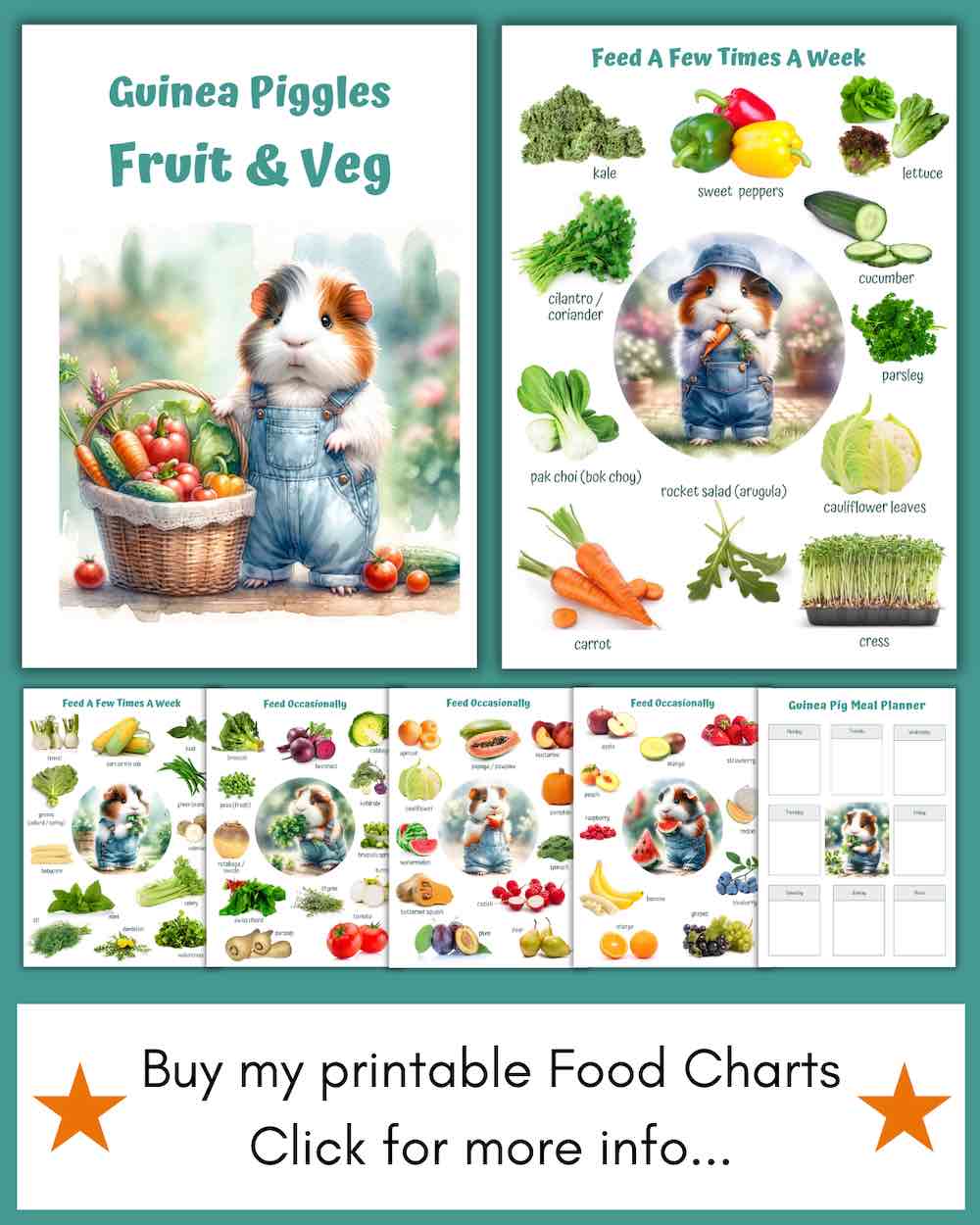
- Frequency: A few times per week, not daily.
- Quantity: Around 1 inch of carrot per piggy, mixed with other vegetables. Include carrot tops if available.
Ensure the total daily fresh food portion consists mostly of leafy vegetables, with carrots or other sweet vegetables offered in moderation.
🥕 🥦 🥬 🌽 🥒 🫑 Providing a variety of vegetables helps reduce the risk of nutritional deficiencies and keeps your guinea pigs healthy ❤️.
Nutrition Information
| Nutrition 🥕 | mg per 100g |
|---|---|
| Vitamin C | 3 |
| Calcium | 30 |
| Sugar | 6.2 |
| Water | 87.7 |
| Fibre | 3.1 |
| Phosphorous | 40 |
Safe Vegetables
Full information on safe vegetables for guinea pigs including feeding guide ›
🫑 Bell Peppers → Read the Bell Pepper guide ›
🥬 Bok Choy → Read the Bok Choy (Pak Choi / Chinese Leaf) guide ›
🥦 Broccoli → Read the Broccoli guide ›
🥕 Carrots → Read the Carrot guide ›
🌱 Celeriac→ Read the Celeriac guide ›
🌱 Celery → Read the Celery guide ›
🥬 Collard Greens → Read the Collard Greens guide ›
🌾 Corn on the Cob → Read the Corn guide ›
🥒 Cucumber → Read the Cucumber guide ›
🌼 Dandelion → Read the Dandelion guide ›
🌿 Fennel → Read the Fennel guide ›
🌿 French Beans (Fine Green Beans) → Read the French Beans guide ›
🥬 Kale → Read the Kale guide ›
🥬 Lettuce → Read the Lettuce guide ›
🌿 Spinach → Read the Spinach guide ›
🍅 Tomato→ Read the Tomato guide ›
🍃 Watercress→ Read the Watercress guide ›
Safe Fruits
Full information on safe fruit for guinea pigs and feeding guide ›
🍎 Apple →Read the Apple guide ›
🍌 Banana →Read the Banana guide ›
🫐 Blueberries →Read the Blueberries guide ›
🍇 Grapes →Read the Grape guide ›
🍈 Melon →Read the Melon guide ›
🍓 Strawberries →Read the Strawberry guide ›
🍉 Watermelon →Read the Watermelon guide ›
Safe Herbs
Full information on safe herbs for guinea pigs and feeding guide ›
🌿 Basil → Read the Basil guide ›
🌱 Coriander (Cilantro) → Read the Coriander guide ›
🌿 Dill → Read the Dill guide ›
🌱 Mint → Read the Mint guide ›
🌿 Parsley → Read the Parsley guide ›
