
Yes, guinea pigs can eat banana as a rare treat in very small amounts. Offer only a small bite-sized piece once in a while, as bananas are one of the most sugary fruits. The main part of your guinea pig’s diet should always be leafy greens, other vegetables and herbs.
Benefits of Banana for Guinea Pigs
- Tasty occasional treat — Most guinea pigs enjoy the sweet flavour and creamy texture.
- Rich in fibre — Helps digestion and supports healthy gut function.
- Contains vitamin C — Guinea pigs can’t make their own vitamin C, so every little helps, though better sources are parsley, kale, and bell peppers.
- Source of potassium and other nutrients — Provides small amounts of essential minerals when fed sparingly.
🍌 How to Safely Feed Banana to Guinea Pigs
- Frequency: Occasionally (once every 1–2 weeks).
- Quantity: A thin slice or small chunk per guinea pig is enough.
- Preparation: Serve raw and fresh. Wash thoroughly.
- Avoid: Overfeeding, banana chips, dried banana, frozen banana, or banana products with added sugar or oils.
Can Guinea Pigs Eat Banana Peel?
Yes — guinea pigs can eat banana peel, as it’s rich in nutrients and fibre.
- Only feed organic banana skin, as non-organic bananas are heavily sprayed with pesticides.
- Wash the peel thoroughly before offering.
- Serve a small piece with the skin attached to the banana slice — this is plenty for a treat.
⚠️ Avoid These
- Banana chips or dried banana — usually contain added sugar, oils, or artificial flavourings.
- Cooked or processed banana — guinea pigs should only eat raw, natural foods.
- Frozen banana – unsafe when frozen or thawed; can upset digestion
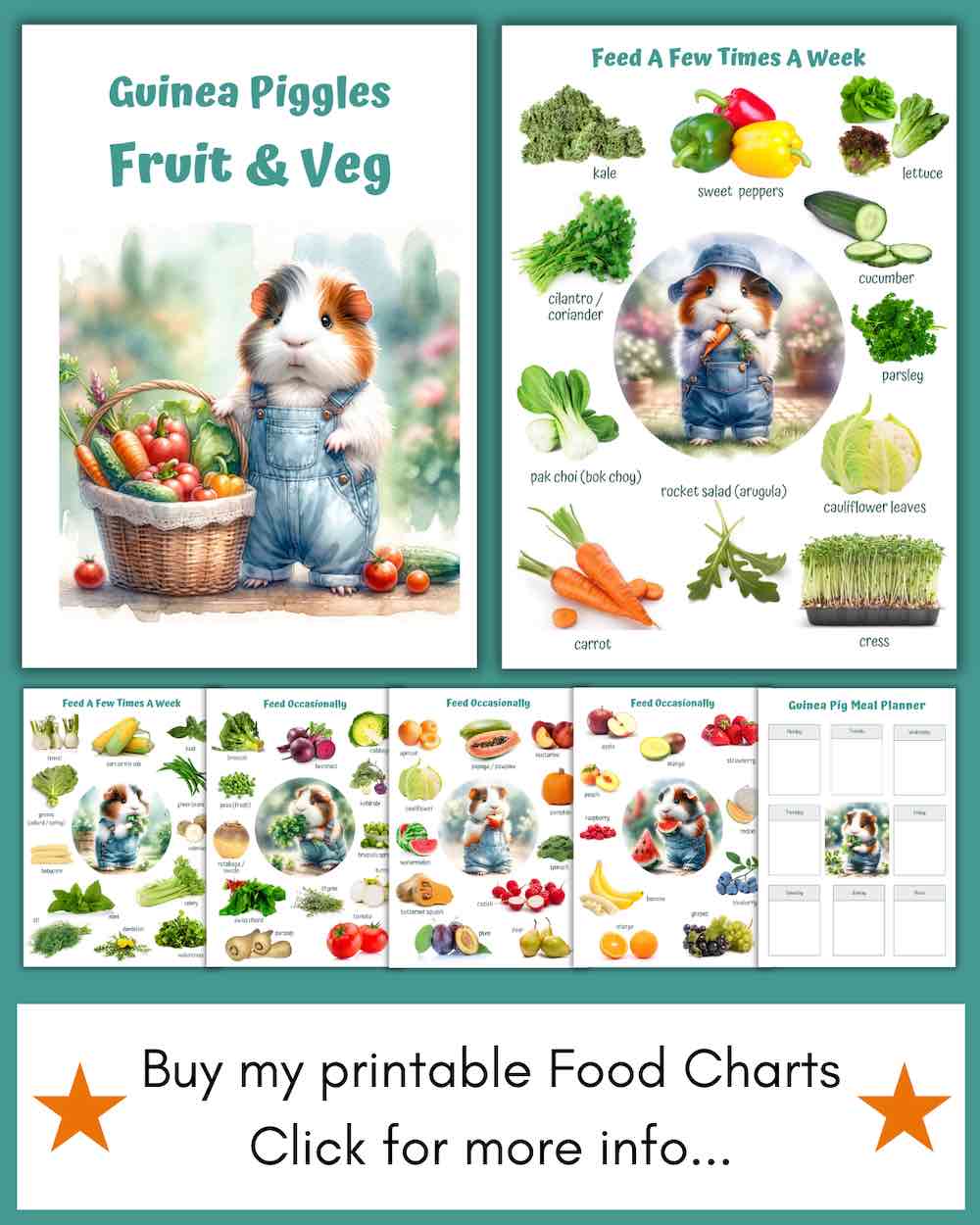
Nutrition Information
| Nutrition 🍌 | mg per 100g |
|---|---|
| Vitamin C | 12.3 |
| Calcium | 5 |
| Sugar | 15.8 |
| Water | 75.3 |
| Fibre | 4.62 |
| Phosphorous | 22= |
Safe Fruits
Full information on safe fruit for guinea pigs and feeding guide ›
🍎 Apple →Read the Apple guide ›
🍌 Banana →Read the Banana guide ›
🫐 Blueberries →Read the Blueberries guide ›
🍇 Grapes →Read the Grape guide ›
🍈 Melon →Read the Melon guide ›
🍓 Strawberries →Read the Strawberry guide ›
🍉 Watermelon →Read the Watermelon guide ›
Safe Vegetables
Full information on safe vegetables for guinea pigs including feeding guide ›
🫑 Bell Peppers → Read the Bell Pepper guide ›
🥬 Bok Choy → Read the Bok Choy (Pak Choi / Chinese Leaf) guide ›
🥦 Broccoli → Read the Broccoli guide ›
🥕 Carrots → Read the Carrot guide ›
🌱 Celeriac→ Read the Celeriac guide ›
🌱 Celery → Read the Celery guide ›
🥬 Collard Greens → Read the Collard Greens guide ›
🌾 Corn on the Cob → Read the Corn guide ›
🥒 Cucumber → Read the Cucumber guide ›
🌼 Dandelion → Read the Dandelion guide ›
🌿 Fennel → Read the Fennel guide ›
🌿 French Beans (Fine Green Beans) → Read the French Beans guide ›
🥬 Kale → Read the Kale guide ›
🥬 Lettuce → Read the Lettuce guide ›
🌿 Spinach → Read the Spinach guide ›
🍅 Tomato→ Read the Tomato guide ›
🍃 Watercress→ Read the Watercress guide ›
Safe Herbs
Full information on safe herbs for guinea pigs and feeding guide ›
🌿 Basil → Read the Basil guide ›
🌱 Coriander (Cilantro) → Read the Coriander guide ›
🌿 Dill → Read the Dill guide ›
🌱 Mint → Read the Mint guide ›
🌿 Parsley → Read the Parsley guide ›
